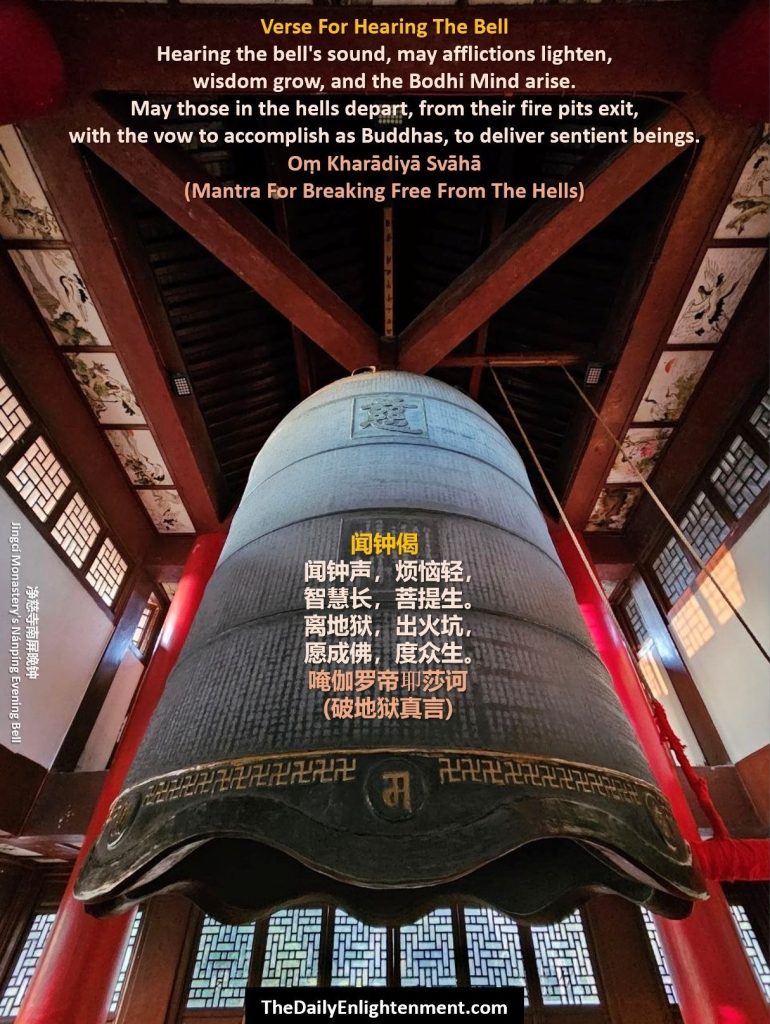
闻钟声,烦恼轻,
智慧长,菩提生。
闻钟偈 (前半)
Hearing the bell’s sound, may afflictions lighten, wisdom grow, and the Bodhi Mind arise.
Verse For Hearing The Bell (First Half)
In the classic song ‘Nánpíng Evening Bell’ (南屏晚钟) written by Fāng Dá (方达) in 1960, with music by Wáng Fúlíng (王福龄), (which has many cover versions after), are these key lyrics, with reflections on them.
「我匆匆的走入森林中,森林它一丛丛。我找不到他的行踪,只看到那树摇风…」
‘I hurriedly walked into the forest, with the forest, its one cluster after another cluster. I could not find his whereabouts, only seeing those trees swaying in the wind…’
With the scene at Mount Nánpíng’s (南屏山: Southern Screen Mountain) area of Hángzhōu (杭州) in China (中国), the protagonist was anxious, in a rush to find her ‘lost’ love in a forest. The many obstructing clusters of trees made it even more difficult to find him, which represented her many layers of attachment, hopes and fears. Not seeing any traces of his location or movements, there were only false hopes ‘offered’ by the trees swaying in the wind.
「只听得那南屏钟… 南屏晚钟,随风飘送。」
‘Only hearing that Nánpíng Bell… Nánpíng Evening Bell’s sounds, that follow the wind, by it drifted and carried.’
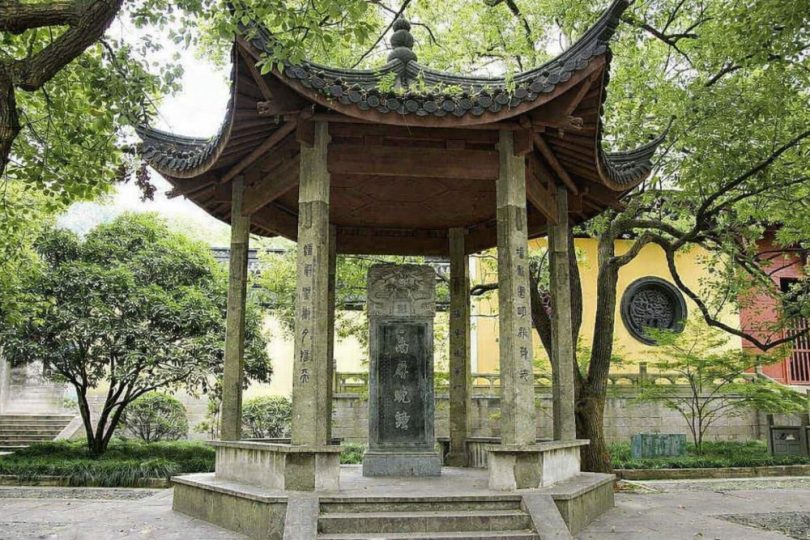
With Jìngcí (Pure Compassion) Monastery (净慈寺) nearby, the Nánpíng Evening Bell (南屏晚钟) heard reverberating in the area due to the mountain’s cavities and valleys is from the temple’s Bell Tower (钟楼). Originating in 1378, its big bell (which currently weighs 10 tons) is one of the West Lake’s Ten Scenes (西湖十景).
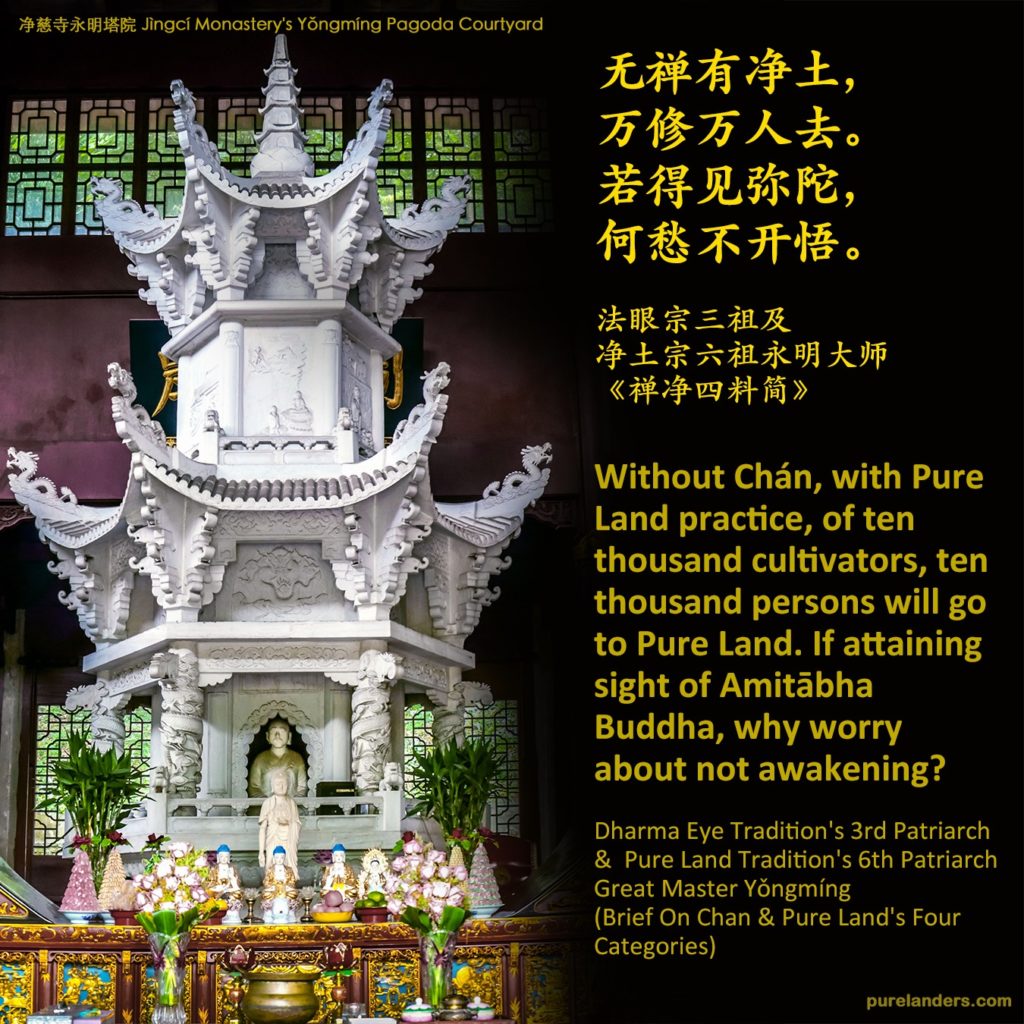
The monastery also has a hall in its Yǒngmíng Pagoda Courtyard (永明塔院), which houses relics (舍利) of the Pure Land Tradition’s 6th Patriarch Great Master Yǒngmíng (净土宗六祖永明大师), who is regarded as Amitā(bha) Buddha’s (阿弥陀佛: Āmítuófó) manifestation (化身).
「它好像是敲呀敲在我心坎中…」
‘They seem to be striking, oh striking, within the bottom of my heart…‘
Preoccupied with finding her love interest with fading hopes, the sound of the bell being struck was as if striking her, right into the very depths of her heart. Listeners might imagine the tolling to be ‘breaking’ her heart, (with this figuratively and literally) taking a heavy ‘toll’ on her. This is however from her projection of pain onto the tolling, reminding us that ‘all are mind-only created’ (一切唯心造).
「它好像是催呀催醒我相思梦。它催醒了我的相思梦,相思有什么用?」
‘They seem to be urging, oh urging and waking me, from my yearning dream. They urged and woke me, from my yearning dream, for yearning has what use?‘
She next realised that the bell functioned like a powerful and repeated wake-up call, prompting to awaken her from pointless pining and searching. The bell thus woke her up to the right way of thinking, to accept reality as it is calmly, by realising that her worldly quest was meaningless indeed. (Of course, if there are sound reasons to resolve what should be resolved, this should still be done.)
Finally letting go of her delusions, hearing the clarifying and purifying sounds as they are with the bell’s tolling, there is aligning to the actual purpose of the Buddhist practice of striking and hearing bells, as expressed in the ‘Verse For Hearing The Bell’ 《闻钟偈》.
When a bell is heard mindfully, afflictions (烦恼) are dissolved then, with the tolling ‘resetting’ our minds, bringing us back to this moment. Thus realigning to our innate wisdom (智慧) within, it as if ‘grows’. Those more ready might even aspire to seek the Full Enlightenment of Buddhahood, for the welfare of one and all, while those with suffering can part from their personal ‘hells’, at least in the moment.
A more straightforward reading of the lyrics is that the ‘striking, within the bottom of my heart’ (敲在我心坎中) already served as the direct wake-up, without it ‘breaking her heart’ at all. This would however, make the lyrics less interesting, missing a more dramatic change of heart and mind, with the epiphany right after.
When caught up in cyclical worries (and other pointless thoughts), it should be remembered that they are like the ‘endless’ yearning, essentially useless, especially after what to be done has been done already. Since we cannot hear a bell all the time, we might as well be mindful of Āmítuófó’s name wholeheartedly (一心念佛). Not only will this give rise to peace of mind, it will create meritorious virtues (功德) that eliminate karmic obstacles (消业障) too, giving us even less reasons to worry.
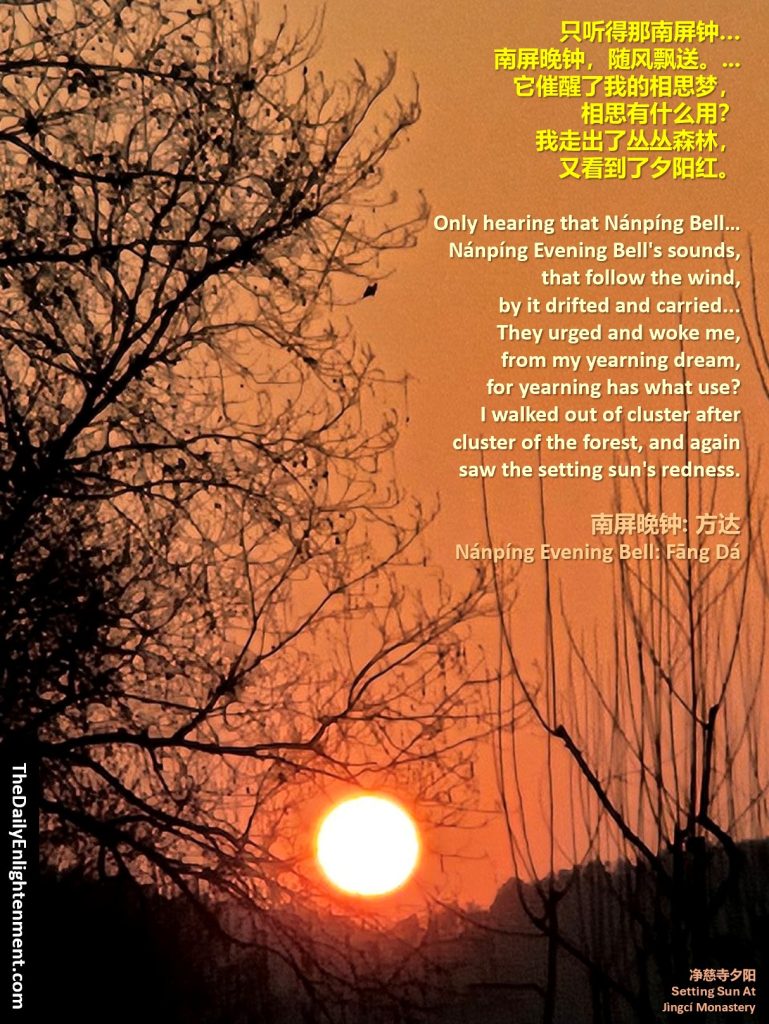
「我走出了丛丛森林,又看到了夕阳红。」
‘I walked out of cluster after cluster of the forest, and again saw the setting sun’s redness.‘
Emerging from clusters of the forest was as if walking out of her convoluted afflictions, by letting go of her attachment, and reopening up to the real world. Out of the ‘punishing’ gradually darkening forest, the ‘reward’ was to catch sight of the light of hope in time, represented by the setting but still red sun.
It signalled the end of her day of frustrations, telling her it is time to go home and rest, for the fresh new day after. Thus is the song, from a somewhat mournful feel, ended on a hopeful note. The setting sun is also a reminder of the fleeting nature of our days left, and to reach the Western Pure Land Of Ultimate Bliss (西方极乐世界) at the end, for returning to our Buddha-nature (佛性).
离地狱,出火坑,
愿成佛,度众生。
闻钟偈 (后半)
May those in the hells depart, from their fire pits exit, with the vow to accomplish as Buddhas, to deliver sentient beings.
Verse For Hearing The Bell (Second Half)
相关偈颂
Related Verse:
钟声偈
Verse On Bell’s Sounds
https://thedailyenlightenment.com/2024/06/verse-on-bells-sounds