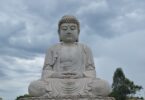
Does existence of an abstract idea
in the mind
prove existence of its exact form
in the universe?Shilashanti
The ancient Greek philosopher Plato (427 to 347 BCE), who was the key disciple of Socrates, shared an intriguing view that came to be called ‘Platonic idealism’. This is the theory that he held to be true, on ‘ideal(istic) forms’. Interestingly, Śākyamuni Buddha (释迦牟尼佛) (c. 563 to 483 BCE), who predated his time, gave somewhat similar but more advanced teachings.
Plato thought that while we humans are universally agreeable on the existence of phenomena like shapes (e.g. circles, squares, triangles, rectangles…) and concepts like qualities (e.g. truth, goodness, beauty, justice…), the versions we encounter are flawed and thus imperfect. For instance, it seems impossible to find or create a perfect circle or justice here.
Yet, exactly because we have some irrefutably existing inklings of circles and justice, there must be their perfect versions somewhere, that we kind of take reference from, consciously and/or subconsciously. He proposed that these perfect versions should exist independent of our imperfect minds, in a higher non-physical realm of ‘ideas’, with unchanging ideals.
In contrast, the material objects and mental concepts experienced in our world are distorted and temporary ‘paled’ versions, though still kind of connected to the perfect essence of their corresponding ideal versions. The physical versions here are thus relative to the absolute ideal versions there, which are called ‘Forms’, that represent fundamental reality.
Therefore, wisdom for True Happiness does not arise from ‘taking refuge’ in the transient and defiled forms of this world, but from realising their eternal and pure essence beyond. This overlaps with the Buddhist teachings, although a key difference is that there are truly Pure Lands (净土) in existence, with pure forms that represent True Form (实相), which is reality itself.
The pristine physicality of Pure Lands transcends mere idealistic ideas. To illustrate, just as there are ‘warped’ lotus flowers in our world, there are perfect ones in Āmítuófó’s (阿弥陀佛) Pure Land Of Ultimate Bliss (极乐世界), manifested and sustained by his immeasurable meritorious virtues (功德). Just as there are limited worldly joys here, there is ultimate spiritual bliss there.
Stretching beyond Plato’s realm of ‘mere’ ideas, the Pure Land teachings offer the path to access and partake of a pure realm, for expediting our ideal of awakening to all of reality, with its Conventional Truths (俗谛), Ultimate Truth (真谛), and the balanced Middle Truth (中谛) between. Since there is only one Tathātā, or True Suchness (真如) of reality, could Plato have ‘glimpsed’ it?
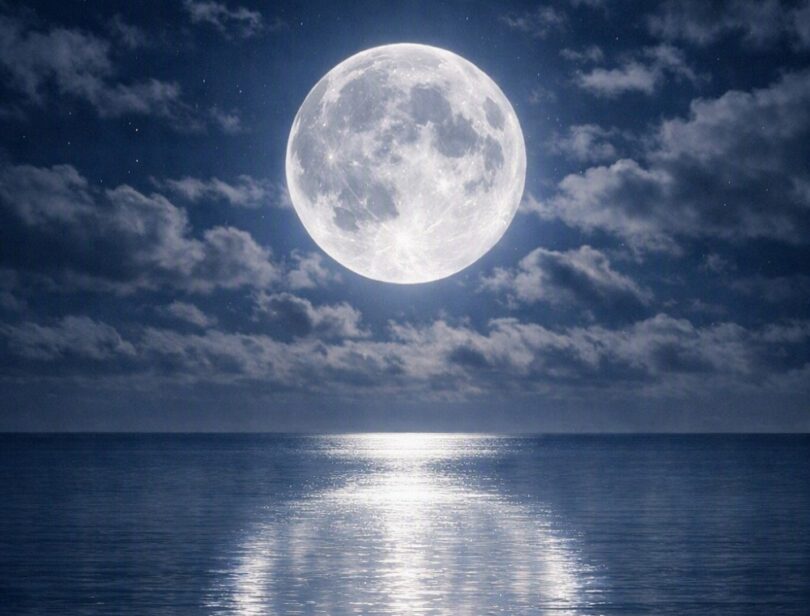
Does existence of a shaky moon reflection
on the restless sea
prove existence of a steady moon
in the still sky?Shilashanti