第八条原则:临产助念,观音圣号
[8] The Eighth Principle: When Approaching Birthing Have Support-Chanting, With Guānyīn Bodhisattva’s Sacred Name
女人临产,每有苦痛不堪,数日不生,或致殒命者。又有生后血崩,种种危险,及儿子有慢急惊风,种种危险者。
Women approaching birthing, often have suffering and pain that cannot be borne, with several days not giving birth, perhaps leading to those losing their lives. Also, there are those after giving birth, with vaginal bleeding [i.e. metrorrhagia], and all kinds of dangers, and children who have chronic or acute infantile convulsion, and all kinds of dangers.
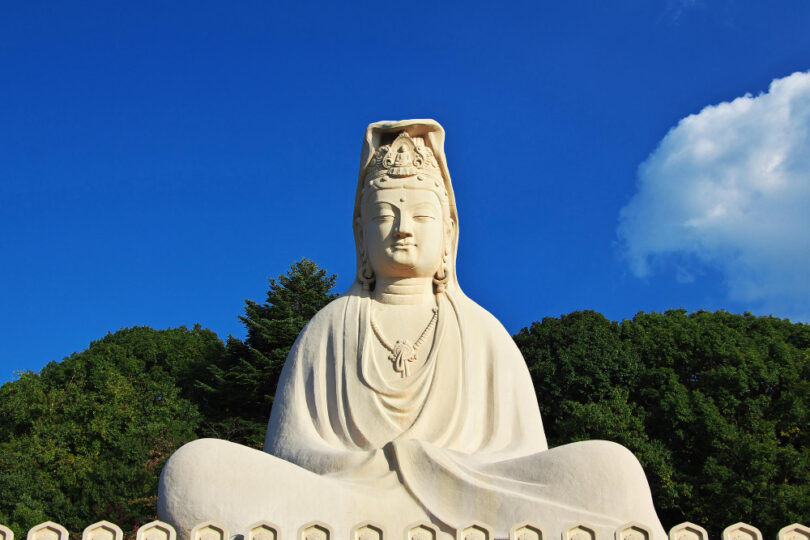
若于将产时,至诚恳切出声朗念「南无观世音菩萨」。不可心中默念,以默念心力小,故感应亦小。
If when going to give birth, with utmost sincerity and earnestness, aloud and clearly recite ‘Námó Guānshìyīn Púsà’ [i.e. Homage To (And Refuge For Life In) Contemplator Of The World’s Sounds Bodhisattva]. It must not then be within the mind silently recited, as with silent reciting’s mind power weak, thus with connection and response also weak.
又此时用力送子出,若默念,或致闭气受病。
Also, at this time, using strength to deliver the child out, if silently reciting, this might perhaps lead to restraining of breathing and receiving of sickness.
若至诚恳切念,决定不会有苦痛难产,及产后血崩,并儿子惊风等患。
If with utmost sincerity and earnestness reciting, there will definitely not be having suffering, pain and difficult birthing, and after birthing without metrorrhagia, also without the child having infantile convulsion and other illnesses.
纵难产之极,人已将死,教本产妇,及在旁照应者,同皆出声念观世音。
Even if with extremely difficult birthing, with the person already going to die, teach this birthing woman, and those at the side taking care, to together aloud recite Guānyīn Bodhisattva’s name.
家人虽在别房,亦可为念。决定不须一刻工夫,即得安然而生。
Family members, although in other rooms, also can for her recite. Definitely not needing a short period of effort, then attaining peacefulness and birth.
(菩萨救众生之心,深切于世之父母爱儿女之心,奚啻有千万亿恒河沙倍。是以临产之妇,能朗念菩萨名号者,为极灵极效之最上妙法。见《续编·复周伯遒书》)
(The Bodhisattva’s mind of saving sentient beings, is deeper than the minds of the world’s fathers and mothers’ love for their sons and daughters, far more than having ten million koṭis of Ganges River’s sands’ number of times. Therefore, of women approaching birthing, they are able to loudly and clearly recite that Bodhisattva’s name, with this as the supreme Dharma Door of utmost spirituality and utmost efficacy. See ‘Second Compilation’s Reply Letter To Zhōu Bóqiú’)
外道不明理,死执恭敬一法,不知按事论理。致一班念佛老太婆,视生产为畏途。虽亲女亲媳,亦不敢去看,况敢教彼念观音乎?
Those of external paths who do not understand this reasoning, are inflexibly attached to reverence, this one Dharma teaching, not knowing to accord to matters for discussing reason. This led a group of old women who practise mindfulness of the Buddha, to see giving birth as a dangerous path. Although with personal daughters and personal daughters-in-law, also not daring to go and see them, moreover not daring to teach them to recite Guānyīn Bodhisattva’s name.
须知菩萨以救苦为心,临产虽裸露不净,乃出于无奈,非特意放肆者比。
It must be known that as the Bodhisattva, is with saving those with suffering as her intention, when approaching birthing, although uncovered and not clean, as this is then due to being without choice, it cannot be with those specially impudent compared.
不但无有罪过,且令母子种大善根。此义系佛于《药师经》中所说,非我自出臆见,我不过为之提倡而已。(《药师经》,说药师佛誓愿功德,故令念药师佛。而观音名号,人人皆知,固不必念药师佛,而可念观音也)。
Not only is this without transgressions, this also enables the Mother and child to grow great good roots. This meaning is connected to the Buddha, in the Medicine Master Sūtra, with that said within, not with me personally coming up with a subjective view, as I am merely writing, for promoting this only. (The Medicine Master Sūtra, speaks of Medicine Master Buddha’s vows’ meritorious virtues, thus enabling reciting of Medicine Master Buddha’s name. Yet, of Guānyīn Bodhisattva’s name, as everyone all knows it, there is undoubtedly no need to recite Medicine Master Buddha’s name, while they can recite Guānyīn Bodhisattva’s name instead.)
[Note 1: As Śākyamuni Buddha (释迦牟尼佛) taught in Medicine Master Sūtra《药师经》, ‘Perhaps, there are women, when reaching birthing, with receiving of extreme suffering, if able to, with the utmost sincere mind recite the name (of Medicine Master Buddha: “南无药师琉璃光如来”: “Námó Yàoshī Liúlíguāng Rúlái” or “Homage To Medicine Master Lapis Lazuli Light Thus Come One”), prostrate and praise, reverently making offerings to that Thus Come One, all suffering will all be eliminated. Of those born children, with their body parts complete, forms and countenances upright, with those seeing them joyful, with sharp roots and intelligence, with peaceful tranquillity and few illnesses, without having non-humans, seizing their essential vitality.’ (或有女人,临当产时,受于极苦,若能至心称名礼赞,恭敬供养彼如来者,众苦皆除。所生之子,身分具足,形色端正,见者欢喜,利根聪明,安隐少病,无有非人,夺其精气。)
Note 2: As the great vows of Buddhas and Bodhisattvas are interconnected, and as Guānyīn Bodhisattva embodies and expresses perfect compassion for all beings, the benefits listed in Note 1 from mindfulness of Medicine Master Buddha’s name can be received from mindfulness of Guānyīn Bodhisattva’s name and Amitābha Buddha’s name (i.e. ‘阿弥陀佛’: ‘Āmítuófó’) too.
Note 3: The Great Master perhaps recommended reciting of Guānyīn Bodhisattva’s name instead of Āmítuófó’s name when birthing as the first is more popularly associated with saving from suffering and saving from difficulties (救苦救难), and delivering of children (送子), while the latter is more popularly associated with receiving and guiding (接引) of the dying and deceased for rebirth in Pure Land (往生净土).
Note 4: However, Guānyīn Bodhisattva also receives and guides beings to the same Pure Land, and Āmítuófó also delivers children. According to the Sūtra In Which The Buddha Speaks Of Amitā(bha) Buddha’s Fundamental Esoteric Spiritual Mantra《佛说阿弥陀佛根本秘密神咒经》, ‘(I)f there are sentient beings, who hear Āmítuófó’s inconceivable meritorious virtues, rejoice enthusiastically, with utmost sincere minds recite (his name), with profound faith and without laxity, thereupon manifests on their bodies, the receiving of incomparable bliss… Perhaps… Attaining children, grandchildren and prosperity, peace and bliss of body and mind, and fulfilment according to their wishes.’ (若有众生,闻说阿弥陀佛不可思议功德,欢喜踊跃,至心称念,深信不懈,于现在身,受无比乐… 或… 得子孙繁荣,身心安乐,如意满足。)
Note 5: Thus, as the great vows of Buddhas and Bodhisattvas are interconnected, for those not attached to the two popular but limited forms of thinking in Note 3, they can surely recite Āmítuófó’s name when birthing, which has the great advantage of being briefer, thus being easier to recite. Of course, Āmítuófó also saves from suffering and difficulties, and is also called the Unsurpassable Great King Of Healers (无上大医王). Thus, his qualities of blessings are also connected to those of Guānyīn Bodhisattva and Medicine Master Buddha.
Note 6: For comparison of their lengths and thus ease of chanting, reciting (1) 南无药师琉璃光如来 requires 9 syllables, reciting (2) 南无观世音菩萨 requires 7 syllables, reciting (3) 南无阿弥陀佛 requires 6 syllables, and reciting (4) 阿弥陀佛 requires only 4 syllables. With 南无 meaning ‘homage to (and refuge for life in)’, the first two recitations, (1) and (2), are usually (i.e. popularly) chanted with 南无, while the third recitation (3) is just as often chanted without 南无, to become the last recitation (4). Chanting without 南无 to save time and energy is alright as long as doing so with utmost sincerity, to also express paying of homage and taking of refuge.]
净土宗十三祖印光大师
Pure Land Tradition’s 13th Patriarch Great Master Yìnguāng
《一函遍复》
(One Letter As A Common Reply)